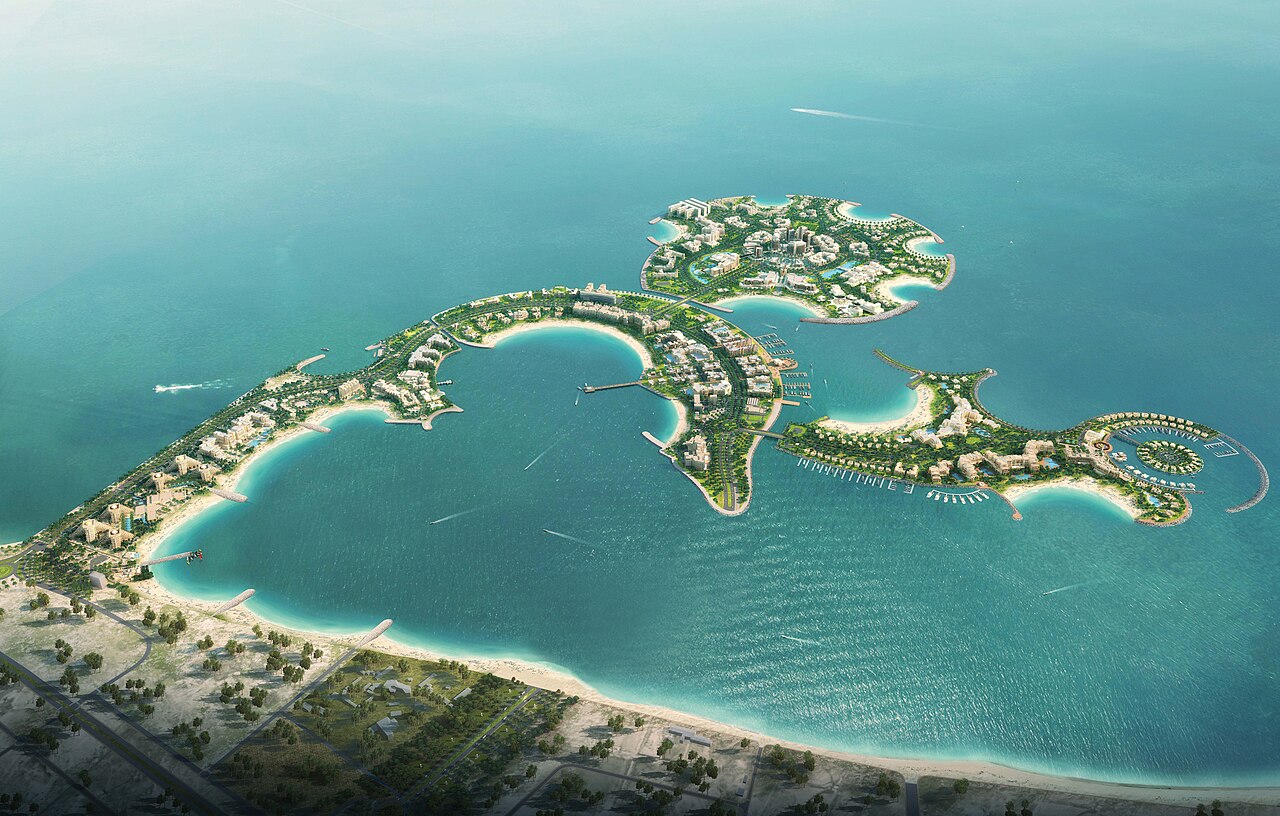
Ras Al Khaimah’s hotel pipeline now runs to more than 20 new properties, as the emirate sets out a plan to roughly quadruple its room count to between 24,000 and 25,000 keys by 2032. The target, outlined by Marjan Hospitality chief executive Alison Grinnell, would take Ras Al Khaimah from roughly 8,000 hotel keys today to a supply base comparable with far larger Gulf destinations — and it is being underwritten by the arrival of Wynn Al Marjan Island, the UAE’s first integrated resort, in 2027.
Doubling, Then Doubling Again
Grinnell framed the expansion in two distinct phases. “We need to double the hotel keys within the next three to four years, and then double it again after 2030,” she said — a sequencing that puts the emirate at roughly 16,000 keys by the end of the decade before the second wave carries it towards 25,000.
That phasing matters. The first tranche is designed to land alongside Wynn Al Marjan Island, giving the emirate enough room inventory to absorb the demand a $5.1 billion integrated resort is expected to generate. The second tranche is a bet on what happens after: that Ras Al Khaimah, having been introduced to a new global audience, holds onto those visitors rather than losing them back to Dubai.
The pipeline itself is unusually brand-heavy for an emirate that spent two decades positioning itself as the affordable, nature-first alternative to its neighbours. Names attached to forthcoming projects include JW Marriott, W, Nikki Beach, Nobu, Fairmont and Four Seasons — a roster that sits some distance from the mid-market beach resorts that have historically carried Ras Al Khaimah’s occupancy.
The Marjan Merger Behind the Numbers
The plan is being driven by a consolidated developer. Marjan and RAK Hospitality Holding merged under a single Marjan brand, bringing master-planning, land and hotel ownership into one balance sheet rather than three. For a destination trying to sequence 17,000 new keys over seven years, that consolidation is arguably as significant as any individual hotel announcement — it removes the coordination problem that typically causes supply waves to arrive late, all at once, or both.
The hotel expansion sits inside RAK Vision 2030, the emirate’s wider economic strategy, which targets 3.5 million annual visitors and positions Ras Al Khaimah as a lifestyle and investment destination rather than purely a leisure one. Against that visitor target, 25,000 keys is not an aggressive number — it is roughly what the arithmetic requires.
The context is a market already running hot. Ras Al Khaimah recorded more than 670,000 visitors in the first half of 2026, its strongest half-year on record, though the composition shifted sharply towards domestic and regional travellers. Room supply, not demand, has increasingly been the constraint during peak weekends — which is precisely the problem this pipeline is meant to solve.
What This Means for Visitors
For travellers, the practical effect arrives in stages rather than all at once. Through 2026 and 2027, expect incremental openings on and around Al Marjan Island — the reclaimed archipelago where most of the new luxury inventory is concentrated. Our Ras Al Khaimah areas guide breaks down how Al Marjan compares with Al Hamra, Mina Al Arab and the older city hotels, which matters more than it used to now that the emirate’s supply is splitting into distinct tiers.
Two things follow from a pipeline this size. First, choice widens considerably at the top end — but the mid-market beach resorts that made Ras Al Khaimah’s reputation are not going anywhere, and they remain the better value for families. Our Ras Al Khaimah hotels guide covers both ends. Second, rates are likely to stay firm through 2027 rather than soften, because demand around the Wynn opening will arrive before the bulk of the new supply does. If you are planning a trip in the Wynn window, book earlier than you normally would.
For anyone tracking the anchor project itself, our Wynn Al Marjan Island opening date and latest news page carries the current timeline. And if you are weighing a trip against Dubai, the emirate’s calmer pace and shorter transfer times remain the real differentiator — something our Ras Al Khaimah itineraries are built around.
The risk worth naming: quadrupling supply in seven years is a genuine bet, not a certainty. If international arrivals do not recover to match the pipeline, Ras Al Khaimah will face the same oversupply pressure that has periodically squeezed other Gulf markets. The emirate’s H1 2026 occupancy figures, which fell despite record visitor numbers, are an early reminder that headline arrivals and hotel economics do not always move together.
Source: Arabian Business