Quick answer
- Best weather: November to March — mild, sunny days around 18–28°C. This is peak season.
- Summer (June–September): very hot, often 40°C+ with high coastal humidity — plan pools, malls and early mornings.
- Rain is rare — roughly 50mm a year, mostly between December and March.
- The sea stays warm all year, from about 22°C in winter to 34°C in late summer.
- Jebel Jais is cooler — usually 5–10°C below the coast, with near-freezing nights in mid-winter.
Ras Al Khaimah has a hot desert climate with two clear seasons: a long, very hot summer from May to September, and a warm, dry, comfortable winter from November to March. The best time to visit for beaches, sightseeing and hiking is November to March, when daytime temperatures sit in the low-to-high 20s°C and rain is unlikely.
If you are still choosing your dates, our season-by-season guide to the best time to visit Ras Al Khaimah breaks down each period by crowds, prices and events alongside the weather.
Ras Al Khaimah weather by season
Winter (December–February): The most pleasant time to visit. Expect warm, sunny days of 20–26°C and cooler evenings around 14–17°C. Ideal for the beach by day, and comfortable for hiking and the desert.
Spring (March–April): Still very pleasant early on, warming quickly. March is excellent; by late April daytime highs push into the low-to-mid 30s°C.
Summer (May–September): Hot and, on the coast, humid. Highs of 40–43°C are normal, with warm nights. Outdoor activity is best limited to early morning and after sunset — this is pool, beach-dip and indoor season.
Autumn (October–November): The heat breaks. October is still warm (mid-30s°C), while November returns to the comfortable high-20s°C that mark the start of peak season.
Ras Al Khaimah weather month by month
The table below shows typical average temperatures and sea temperatures for coastal Ras Al Khaimah. Treat these as a planning guide — actual conditions vary year to year.
| Month | Avg high | Avg low | Sea temp | Feel |
|---|---|---|---|---|
| January | 24°C | 14°C | 22°C | Cool, sunny — excellent |
| February | 25°C | 15°C | 22°C | Warm, sunny — excellent |
| March | 29°C | 18°C | 24°C | Warm — excellent |
| April | 34°C | 22°C | 26°C | Getting hot |
| May | 39°C | 26°C | 29°C | Hot |
| June | 41°C | 29°C | 31°C | Very hot, humid |
| July | 42°C | 31°C | 33°C | Very hot, humid |
| August | 42°C | 31°C | 34°C | Hottest, humid |
| September | 40°C | 28°C | 33°C | Very hot |
| October | 36°C | 25°C | 31°C | Hot, easing |
| November | 31°C | 20°C | 28°C | Warm — great |
| December | 26°C | 16°C | 24°C | Cool, sunny — excellent |
Rainfall and humidity
Ras Al Khaimah is dry. Total annual rainfall is only around 50mm, and it falls almost entirely in short bursts between December and March. Most visitors never see a drop. Humidity is the bigger factor: coastal areas near Al Marjan Island and Mina Al Arab feel sticky in summer, while the inland desert is drier but hotter.
Jebel Jais weather (the mountain)
The UAE’s highest mountain runs on its own climate. Jebel Jais is typically 5–10°C cooler than the coast, which makes it a welcome escape in the shoulder seasons. In mid-winter, summit temperatures can drop close to freezing overnight, so bring a jacket if you are heading up for sunset, the zipline or camping.
Beach and sea weather
The Arabian Gulf here is swimmable year-round. Winter sea temperatures of around 22°C are refreshing but comfortable, while by August the water reaches a bath-like 34°C. For where to swim, see our guide to the best beaches in Ras Al Khaimah.
What to pack for the Ras Al Khaimah weather
Winter: light layers, sunscreen, a light jacket for evenings and Jebel Jais. Summer: loose, breathable clothing, strong sun protection, and a swimsuit — you will live between air-conditioning and water. Modest clothing is appreciated in the city and at heritage sites year-round.
Planning the trip in full? Pair this with our winter-sun itinerary, the best things to do in Ras Al Khaimah, and a desert safari for the cooler months. For budgeting, see Ras Al Khaimah travel costs.
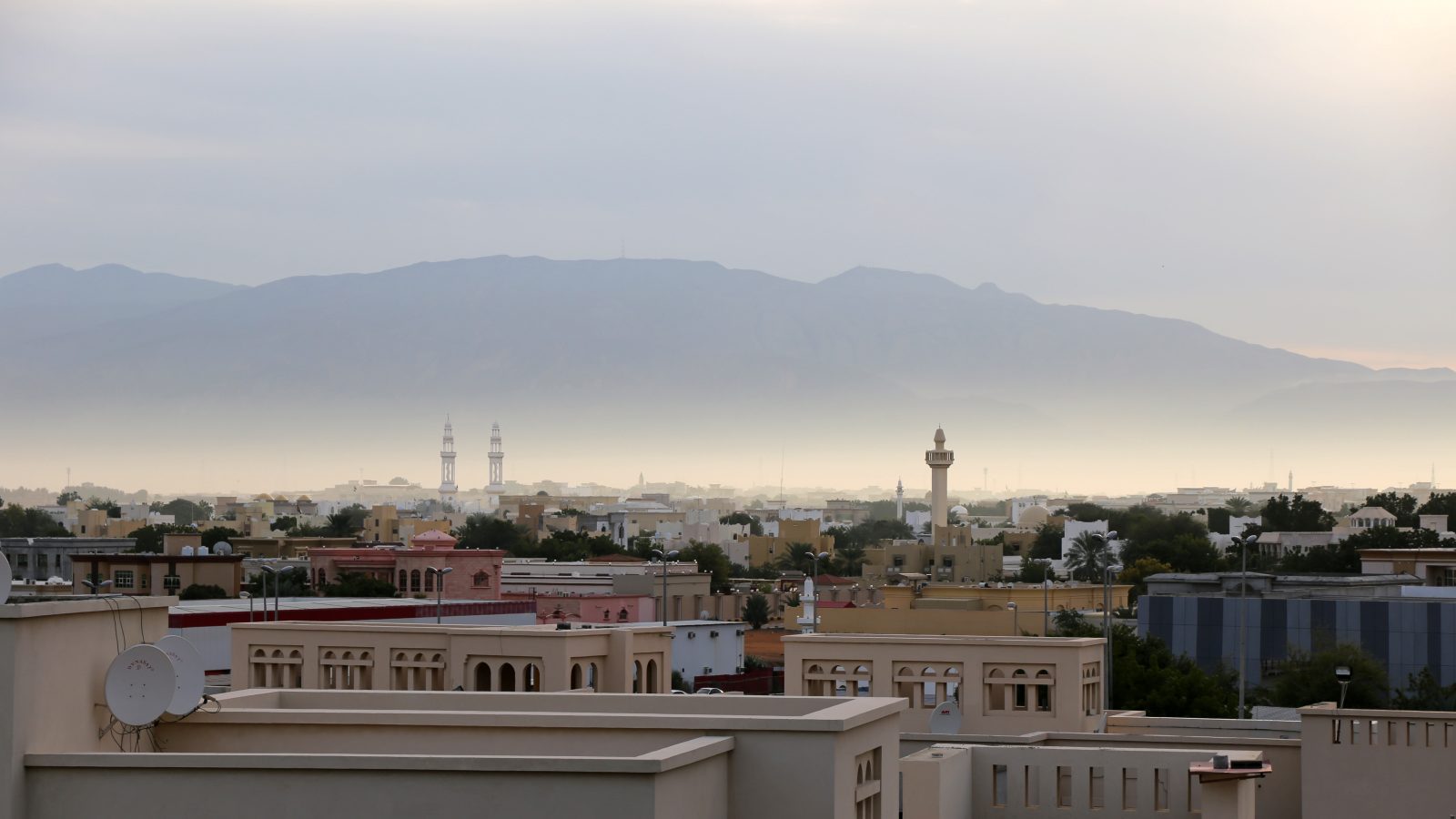
Featured image: photo by Vincent Eisfeld (CC BY-SA 4.0) via Wikimedia, cropped.