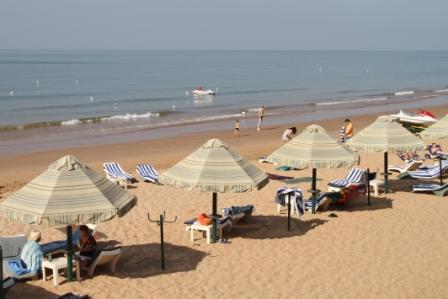
A new Flamingo Beach barbecue ban has come into force in Ras Al Khaimah, with the emirate’s Public Services Department prohibiting charcoal burning and barbecuing at the popular public beach from 10 September 2026. The restriction was announced as the UAE heads into its cooler outdoor season, when beach picnics and weekend grills become one of the most popular pastimes for families and groups of friends across the Northern Emirates. Authorities said the measure is intended to preserve the beach’s appearance and keep it clean, safe and accessible for everyone who uses it.
What the new Flamingo Beach rule says
The Public Services Department in Ras Al Khaimah confirmed that lighting charcoal and using barbecue grills are no longer permitted anywhere at Flamingo Beach. The department urged the public to comply voluntarily, framing the restriction as a shared responsibility rather than a purely punitive measure, and asked beachgoers to help keep the shoreline in good condition for other visitors.
The reasoning is practical as much as environmental. Charcoal and barbecue waste are difficult to dispose of safely on sand, and hot coals can stay dangerous long after a grill has been packed away. Embers buried in sand remain capable of causing serious burns hours later, which is a particular hazard on a beach where children and adults walk barefoot. Discarded charcoal, foil and food waste also attract litter and degrade the look of the shoreline during the busiest months of the year.
Flamingo Beach sits on Ras Al Khaimah’s mangrove-fringed coastline and is best known for the birdlife that gives it its name. It is a quieter, more natural stretch of coast than the resort beaches further south, which makes it especially sensitive to litter and open-fire cooking.
Why this matters for Ras Al Khaimah
The timing is deliberate. Ras Al Khaimah’s outdoor season runs roughly from November through April, and the weeks either side of it are when campsites, wadis, mountain viewpoints and public beaches see their heaviest use. The emirate welcomed a record 670,000 visitors in the first half of 2026, with domestic arrivals up sharply year on year, and that growth puts real pressure on free-to-use public spaces that were never designed for high-volume weekend crowds.
Ras Al Khaimah has positioned itself as the UAE’s nature emirate, and its tourism strategy leans heavily on mountains, mangroves, wadis and undeveloped coastline. Protecting those assets is not a side issue for the destination; it is the product. Measures like the Flamingo Beach barbecue ban sit alongside earlier beach safety campaigns run by Ras Al Khaimah Police, which sent teams to beaches in Shaam, Al Rams, Al Mairid and Ras Al Khaimah city to brief families on water safety and lifeguard instructions.
The emirate is not alone in tightening the rules. In Al Ain, signage across the Jebel Hafeet parking areas already prohibits barbecue activity outright, and Abu Dhabi’s public appearance law carries escalating fines for ignoring prohibition signs in public areas. Ras Al Khaimah’s move brings its most environmentally sensitive beach into line with that wider regional approach to managing popular outdoor spots.
What this means for visitors and residents
If a beach barbecue was part of your plan for the coming season, Flamingo Beach is now off the list for grilling. That does not make it off-limits: walking, swimming, birdwatching and picnicking with prepared food are all unaffected. The restriction applies specifically to charcoal burning and barbecue use.
For anyone planning a cooler-season trip, the practical takeaways are straightforward. Bring food ready to eat rather than ready to cook. Take all waste away with you, including any packaging that could blow into the mangroves. Watch for posted signage, which is the clearest guide to what is permitted at any given beach, and assume that rules can differ from one stretch of coast to the next. If a barbecue is genuinely the point of the day out, check a designated picnic or camping area in advance rather than turning up and improvising.
It is also worth planning around this when choosing where to spend a beach day. Our guide to the best beaches in Ras Al Khaimah covers the differences between public beaches, resort beaches and quieter northern stretches, and there is more on outdoor planning across the emirate in our things to do in Ras Al Khaimah and RAK travel advice sections. Visitors basing themselves on the resort coast can find the local context in our Al Marjan Island guide.
Expect more of this rather than less. As Ras Al Khaimah’s visitor numbers climb toward its 3.5 million target for 2030, rules governing how public natural spaces are used are likely to keep tightening. For most travellers the impact is minor; for the mangroves and the birds at Flamingo Beach, it is the difference between a coastline that holds up under the crowds and one that does not.
Source: Khaleej Times and Gulf News.