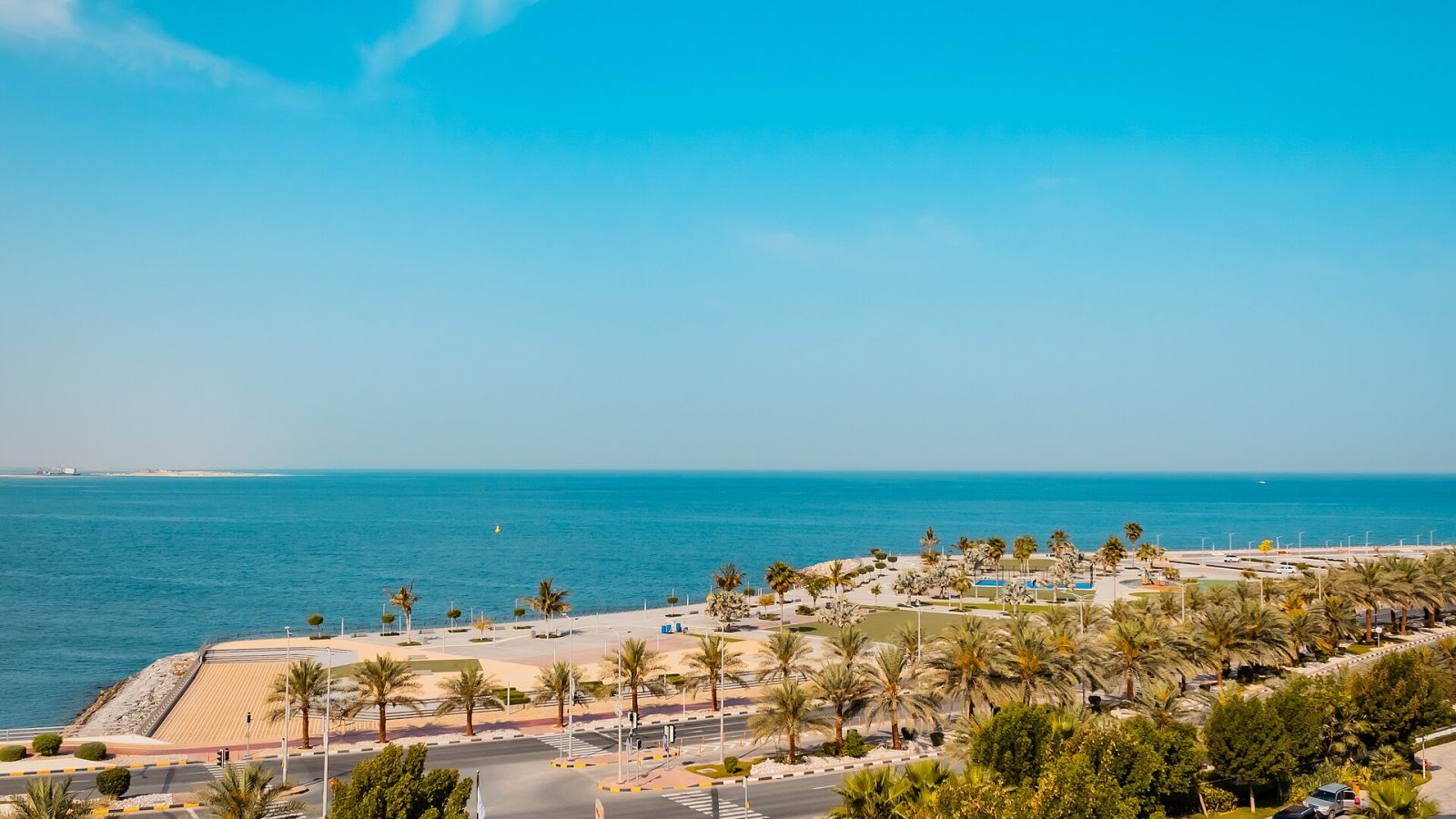
Ras Al Khaimah has signed one of the more consequential marketing deals in its recent tourism history. The new RAKTDA Emirates partnership – a memorandum of understanding between the Ras Al Khaimah Tourism Development Authority and Emirates airline – was inked at Arabian Travel Market 2026 in Dubai this week, and commits both sides to jointly funded marketing campaigns aimed at bringing travellers from selected markets across the carrier’s network to the northern emirate. For a destination targeting 3.5 million annual visitors by 2030, access to an airline flying to close to 140 destinations is the missing piece the strategy has needed.
What the agreement actually commits to
Under the MOU, announced in a tourism authority statement on Tuesday, RAKTDA and Emirates will share marketing costs for campaign activity in Ras Al Khaimah’s priority source markets. The two organisations will also work together to identify which traveller segments are prioritised and leveraged across those campaigns – in practice, deciding jointly who gets targeted rather than each side marketing in isolation.
The signing took place at a ceremony during ATM 2026, the four-day travel trade show that opened in Dubai on Monday and where Ras Al Khaimah has been running an expanded destination pitch. Phillipa Harrison, chief executive of the Ras Al Khaimah Tourism Development Authority, framed the deal in terms of the trade rather than pure volume: “Through our collaboration with Emirates, we aim to build long-term value for our tourism partners and offer travellers more reasons to visit the UAE and explore Ras Al Khaimah.”
Adnan Kazim, Emirates’ deputy president and chief commercial officer, was more explicit about the mechanics. “We are proud to support the Ras Al Khaimah Tourism Development Authority and their 2030 tourism targets,” he said, adding that the airline’s network reach of close to 140 destinations “provides the scale required to reach new travellers and encourage them to expand their itinerary with the rich experiences Ras Al Khaimah has to offer.”
That phrasing – expanding an itinerary – is the strategic heart of the deal. Ras Al Khaimah is not competing with Dubai for the long-haul arrival; it is trying to capture two or three nights of a trip that lands at DXB.
Why this matters for Ras Al Khaimah
The RAKTDA Emirates partnership targets what has consistently been the weak link in the emirate’s tourism formula. Ras Al Khaimah International Airport handles a limited schedule, and the overwhelming majority of international visitors arrive through Dubai, roughly an hour away by road. Rather than wait for direct long-haul capacity that may take years to materialise, RAKTDA is leaning on the connectivity that already exists and buying visibility inside Emirates’ marketing funnel.
The timing is deliberate. In July the tourism authority reported the emirate had welcomed more than 670,000 visitors in the first half of 2026, its strongest first half on record and around 2.4 per cent up on the 654,000-plus logged in the same period of 2025. That growth came despite regional instability, and was driven heavily by domestic UAE travel rather than international arrivals. Converting a record built on staycations into sustained international visitation is precisely the gap an airline partnership is meant to close.
Behind the marketing sits a hard pipeline. Wynn Al Marjan Island, the $5.7 billion integrated resort under construction with Wynn Resorts and local partners, is due to open in September 2027 and will need international demand from day one. It joins a roster of incoming names including Nobu, Janu and Four Seasons, plus two new marinas and a growing hotel inventory. RAKTDA has been clear that awareness – simply making sure potential visitors know what the emirate offers – is one of the five pillars of its 2030 plan, and this deal is the awareness pillar with an airline attached to it.
It also follows a broader repositioning: the authority has been steadily moving away from a value-led pitch toward a premium one, appointing new creative and marketing leadership over the past year. A cost-shared campaign with Emirates fits that direction far better than discounting.
What it means for travellers
Nothing changes at the booking stage today. This is a marketing agreement, not a new route, a codeshare or a fare product – there is no announcement of Emirates flights into Ras Al Khaimah International Airport, and no published package deal yet. What travellers should expect over the coming months is Ras Al Khaimah appearing in places it previously did not: Emirates campaign material, destination content aimed at specific source markets, and trade activity through the airline’s partner network.
The practical upside is likely to show up as stopover and add-on itineraries – Dubai plus a few nights north – and eventually as bundled packages built with the airline’s holiday arm. If you are planning a trip now, the route remains the same as it has always been: fly into Dubai, then drive or transfer. Our RAK travel advice covers the transfer options and timings, while RAK hotels and things to do in Ras Al Khaimah set out what the extra nights actually buy you. Anyone tracking the emirate’s bigger transformation should keep an eye on our Wynn Al Marjan coverage, which remains the single biggest variable in these visitor forecasts.
Source: GGRAsia