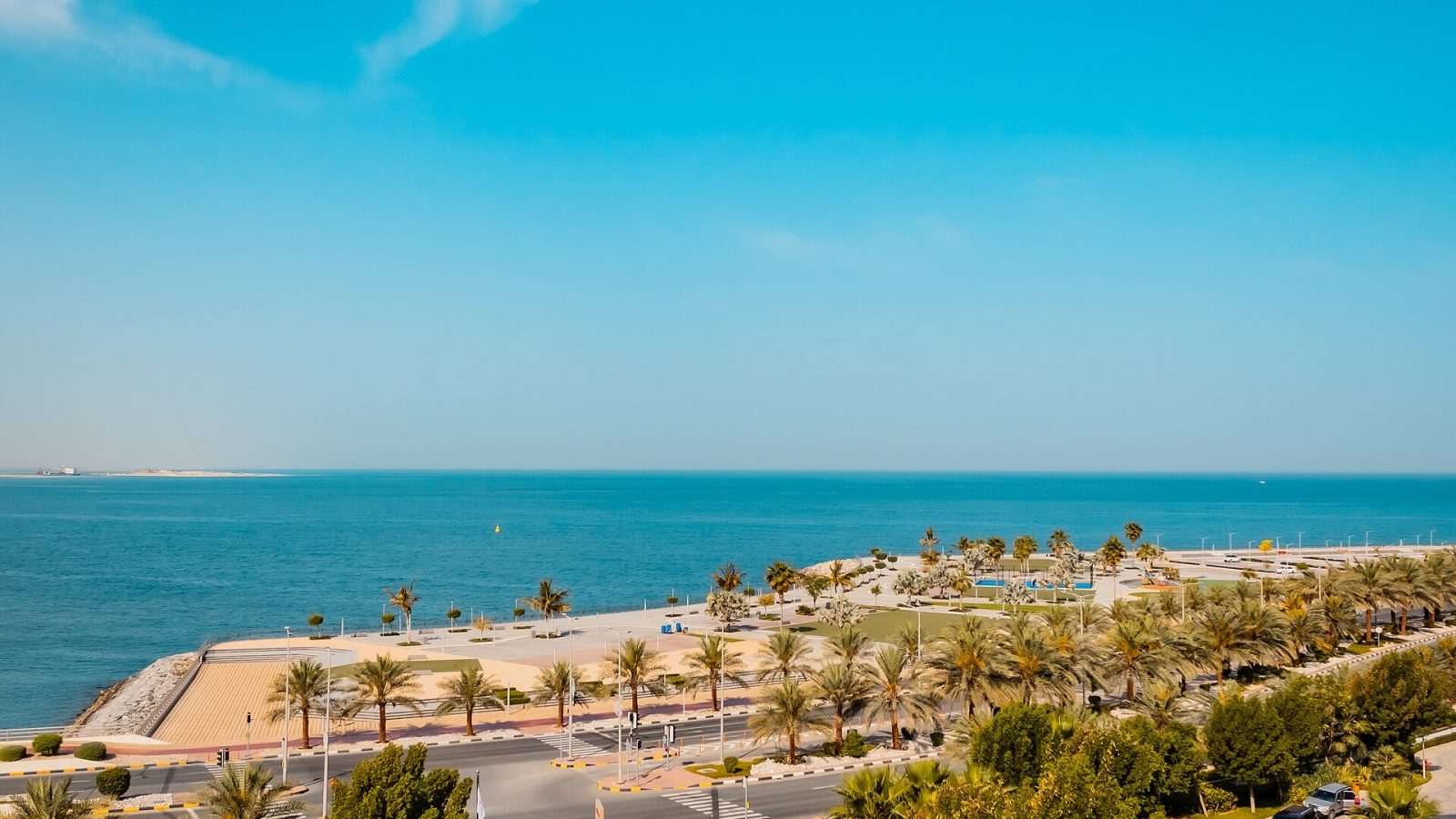
Ras Al Khaimah tourism 2030 planning now has a public shape to it. Speaking at Arabian Travel Market in Dubai, Ras Al Khaimah Tourism Development Authority chief executive Phillipa Harrison set out how the emirate intends to reach 3.5 million visitors a year by the end of the decade, and made clear that Wynn Al Marjan Island, due to open in September 2027, is a starting gun rather than the whole race. Alongside Wynn, the authority is developing two world-class marinas, a VIP terminal at Ras Al Khaimah International Airport, and a run of experiences built to work outside the hotels entirely.
Wynn Is the Inflection Point, Not the Destination
Harrison described the 5 billion dollar-plus integrated resort as the largest piece of tourism infrastructure the region has seen in a long time, but framed it as one part of a wider story. The point is commercial as much as editorial: a single landmark opening can lift awareness sharply, then leave a destination exposed if nothing behind it holds the visitor once the novelty fades.
She is also blunt that the emirate did not rise suddenly. The decision to pursue one anchor brand was taken roughly a decade ago, and what looks like an overnight success is the delayed result of that call. Wynn will be joined by Nobu, Janu, The Unexpected and Four Seasons as the pipeline fills out, a run of openings that will reshape what Ras Al Khaimah can charge and who it can attract.
The risk Harrison names is sameness. Her view is that destination marketing across the region has converged on the same imagery and the same promises, and that Ras Al Khaimah has to be specific about what it offers instead. The answer she gives is range: a mountain, a beach and a quieter pace, all inside one small emirate.
Marinas, a VIP Terminal and the Five-Part Plan
The most concrete new detail is the marina programme. Two world-class marinas are in development, with Harrison saying the emirate will build a real focus on yachting around them. For a coastline that has so far been read almost entirely through beach resorts, that is a different kind of visitor and a different kind of spend: berth holders, charter traffic and the service economy that follows a working marina.
Access is the second lever. Ras Al Khaimah International Airport is being developed alongside improved connectivity through Dubai, and the plan includes a VIP terminal for private aircraft. That pairs neatly with the luxury pipeline: a Four Seasons or a Janu guest arriving by private jet currently clears through Dubai, and every transfer added is a reason to shorten the stay or skip it.
Harrison frames the whole 2030 push as a five-part formula: access, accommodation, attractions, amenity and awareness. Each is planned separately but judged on whether it supports the others, which is a useful corrective to the usual pattern of building rooms first and hoping demand follows. On current numbers there is something to build on. The emirate took more than 670,000 visitors in the first half of 2026, its strongest first half on record, largely on the strength of domestic and regional travel.
Just as important is what sits outside the hotels. The authority is deliberately developing experiences that are not resort-dependent, from the mountain trails on things to do in Ras Al Khaimah through to heritage sites such as Dhayah Fort, so that the destination has a reason to exist for a visitor who is not staying on Al Marjan Island.
What This Means for Visitors
For anyone planning a trip in the next two years, the practical read is that Ras Al Khaimah is about to get considerably more expensive at the top end and considerably better served across the board. The 2027 Wynn opening will pull rates up across RAK hotels in the weeks around it, and the brands arriving behind it are pitched at a guest who has been going to Dubai. If you have been coming here because it is the quieter, cheaper northern emirate, the next 24 months are the window to keep doing that.
The marinas matter for a narrower group but change the shape of a trip. Once berthing is in place, day charters and coastal sailing become a realistic addition to an itinerary that currently runs beach, mountain and desert. The VIP terminal, similarly, only affects a small share of arrivals, but it signals that the airport is being positioned as a genuine gateway rather than a low-cost satellite.
The more interesting commitment is the one about experiences outside the hotels. Harrison says she wants the emirate associated with restoration, a place to take a breath, and that positioning only holds if there is something to do that is not a resort pool. Trails, forts, marinas and the mountain remain the reason to choose Ras Al Khaimah over its neighbours, whatever opens on Al Marjan Island. Her own test for 2030 is whether the emirate can roughly double in size and triple its visitor numbers while still feeling small.
Source: The National