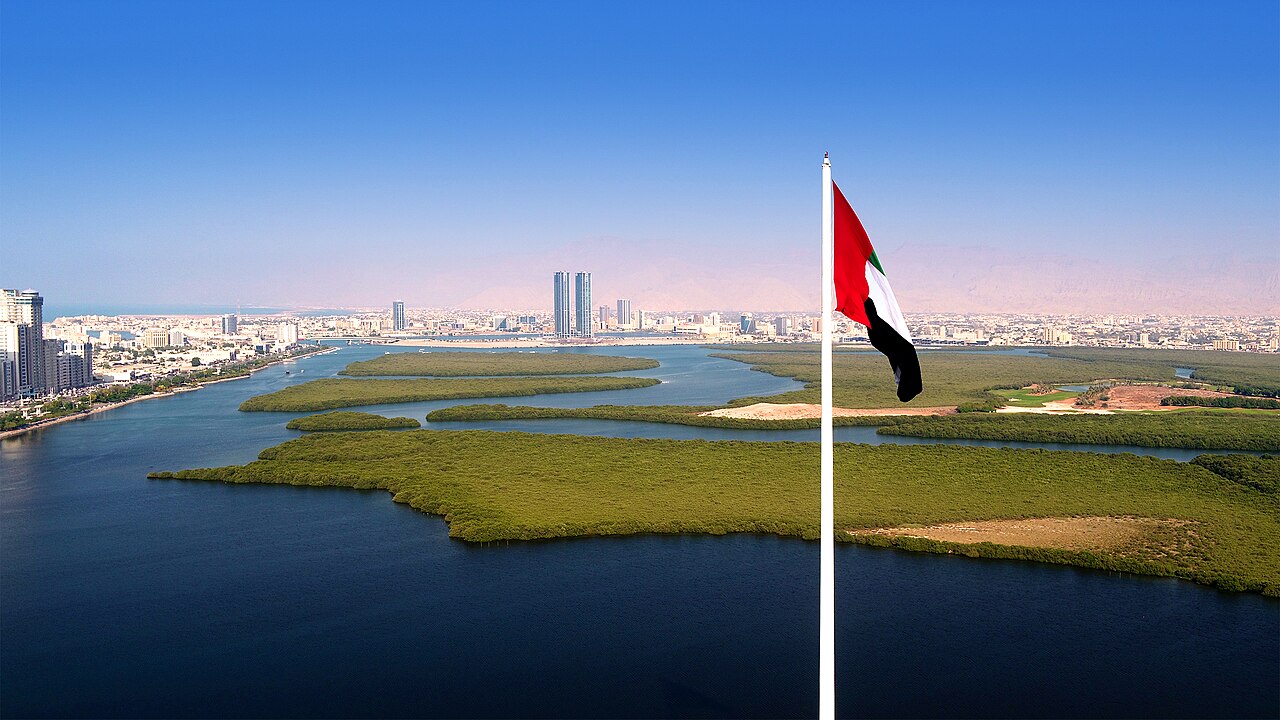
His Highness Sheikh Saud bin Saqr Al Qasimi, Supreme Council Member and Ruler of Ras Al Khaimah, inaugurated the AIM Investment Summit 2026 at the Dubai World Trade Centre on 7 September, opening the 15th edition of the region’s largest investment gathering under the patronage of His Highness Sheikh Mohammed bin Rashid Al Maktoum, Vice President and Prime Minister of the UAE and Ruler of Dubai. The three-day summit has drawn 25,000 participants from 191 countries and 540 speakers across 103 sessions, and it handed Ras Al Khaimah an unusually prominent stage: the Ruler’s keynote was titled “The Ras Al Khaimah Model: Building a Global Investment Gateway from a Regional Emirate”.
What the Ruler of Ras Al Khaimah Told the Summit
Sheikh Saud framed the summit as arriving at a moment of rapid change in the global economy, shaped by geopolitical shifts, emerging technologies, evolving trade patterns and the energy transition. He argued that the UAE has built a development model founded on openness to the world, sustained investment in infrastructure, human capital and entrepreneurship, and stronger connections between markets, cultures and peoples, with continued progress in renewable energy, advanced manufacturing, logistics, digital technologies and artificial intelligence.
Turning to his own emirate, he said Ras Al Khaimah had diversified its economy through long-term planning and trust-based partnerships, spanning manufacturing, tourism, logistics, real estate and emerging industries. The emirate’s business ecosystem now takes in more than 73,000 companies from over 100 countries, which he presented as evidence of confidence in Ras Al Khaimah as a place to establish and expand a business. Investors, he said, look for stability, transparency, reliable institutions and partners who honour their commitments, and that is the environment the emirate has worked to build.
He also restated the emirate’s headline tourism ambition: tripling visitor numbers by 2030. That single target sits behind almost every hotel, attraction and infrastructure announcement coming out of Ras Al Khaimah at the moment.
The Wider Summit Picture
The summit opened with a keynote from His Excellency Dr Thani bin Ahmed Al Zeyoudi, Minister of Foreign Trade and Chairman of the Summit, under the theme “Reshaping Global Prosperity: Opening New Investment Pathways Towards a Sustainable and Inclusive Future”. He noted that UAE non-oil foreign trade exceeded AED 1.9 trillion in the first half of 2026, and that the country attracted US$48.3 billion in foreign direct investment during 2025, moving to ninth place globally, with the cumulative stock of FDI passing AED 1.17 trillion.
Guest of honour was His Excellency Taye Atseki Selassie, President of Ethiopia, who set out investment opportunities across clean energy, agriculture, critical minerals, infrastructure and human capital, and thanked the UAE for its “5 Million Coders” initiative. Other dignitaries included the President of Tatarstan, the Prime Minister of Uganda, the Deputy Prime Minister of Mongolia and the Secretary-General of the Gulf Cooperation Council. The summit runs until 9 September.
Why This Matters for Ras Al Khaimah
Putting the Ruler of Ras Al Khaimah at the podium of a Dubai-hosted investment summit of this scale is a signal in itself. For years the emirate’s pitch was framed against its larger neighbour. This keynote framed it as a model in its own right: a smaller emirate that built institutional credibility first and used it to attract capital across several sectors at once, rather than betting everything on one.
That capital is visible on the ground. The Wynn Al Marjan Island integrated resort remains the emirate’s single largest project, and a wave of new RAK hotels is due to open between now and 2028. Tripling visitor numbers by 2030 is not achievable on the current room stock, which is why the hotel pipeline and the tourism target keep moving together.
What This Means for Visitors
For travellers, the practical read is straightforward. More investment means more rooms, more flight routes into Ras Al Khaimah International Airport and more to do year-round. It also means the quiet, low-rise character that draws people to the emirate in the first place will come under more pressure with each season. If mountains, mangroves and near-empty beaches are the appeal, the next two or three winters are a good window.
Anyone weighing up a first trip can start with our guide to things to do in Ras Al Khaimah, or compare the two emirates directly in Ras Al Khaimah vs Dubai. Investors and long-stay visitors now have a clearer read on the emirate’s economic case, laid out for a global audience rather than a domestic one.